• December 27, 2016 /  Miscelleaneous

    Five Wellness Tips for Seniors

    This is our last post in the ongoing series on health topics, and we’re going to go over five basic tips that all seniors can apply in their lives. By taking these general proactive steps you can lessen and even delay the severity of any health issues that arise. As always, run any diet and supplement changes by your doctor first!

    Tip #1: Take a fish oil supplement, which are rich in EFAs. Many seniors have a limited income and having something that gives the best bang for your buck is always a plus. Fish oil is one of them and highly recommended by many health professionals.

    Fish oil helps manage cardiovascular health by making platelets less sticky and therefore reducing your likelihood of clots, which can cause strokes or heart attacks. They also reduce atherosclerosis by lowering two repair proteins that encourage the spread of atherosclerotic tissue in arteries. In effect, they help fully open arteries. Fish oil assists in reducing inflammation for those with osteoarthritis or injuries due to trauma. It’s actually a key factor in decreasing age related memory decline. Those at risk for Alzheimer’s and/or dementia will find this extremely important.

    Tip #2: Eat a wide variety of fresh, organic food. This tip can be applied to anyone since many settle into a regular routine regardless of age. Eating the exact same thing for years increases one’s chance of accumulating food sensitivities. When this happens, digestive issues crop up and effective absorption of nutrients from food is reduced. Disease and other health related issues are guaranteed to become a problem. As we age, stomach acid (which is key in helping one break down food in the digestive system) is produced less. Eating seasonally and/or buying a CSA will help one increase variety in their diet.

    Tip #3: Take a probiotics and eat foods rich in good bacteria. Probiotics help increase your immune system, which can be very helpful for seniors that get ill often. If you’re encountering any food sensitivities (because you didn’t follow tip #2!) then probiotics are definitely your friend. Some foods that are rich in good bacteria are kombucha tea, kimchi, sauerkraut, miso and kefir.

    Tip #4: Take a CoEnzymeQ10 supplement. When our body becomes ill or imbalanced, it creates free radicals. One way of addressing this is to increase your antioxidants. CoEnzymeQ10 is an antioxidant nutrient and is a key factor in preventing atherosclerosis and other cardiovascular related problems. Many medications on the market directed at seniors have a side effect that drastically depletes your CoEnzymeQ10 reserves. If you take any heart medication it is imperative that you take this supplement.

    Take #5: Include medicinal mushrooms in your diet. Fungi are more beneficial to humans than you might expect! Traditionally used in ancient cultures for a range of conditions, they are useful for the immune, respiratory, circulatory, nervous, digestive, and skeletal/muscular systems. They work very similarly to an adaptogen by helping the body return to a balanced state. Numerous studies suggest they contain compounds that support immunity, prevent infection and provide additive or synergistic effects in the prevention and treatment of cancer. Medicinal mushrooms include shitake, maitake, reishi and cordyceps.

    Senior health care is often a cause of concern. You may have spent a large part of your younger life pursuing work, career and family goals. As you retire from your hectic routine, the pace of life begins to slow down. It requires effort to pay attention to what your body demands, and ensure that you continue to live a long and healthy life.

    With age, priorities change. If those were the days when earning money or sustaining the needs of your family was your priority, the senior years can be looked upon as an opportunity to pamper yourself. Take care of yourself. Beyond these tips, look for other ways to improve your overall wellbeing. Go get a massage, join a spa, or sign up for an art class. Think outside the box. By incorporating practical healthcare with inner self-care, you’ll find great advantages to embracing your senior years!


    Tags: , , , , , , , , , , , ,

  • December 12, 2016 /  Miscelleaneous

    How To Exercise When You Have Arthritis
    This is part of a continuing series on how seniors can stay fit long into their older years. Arthritis is extremely common among the elderly, and can affect life negatively in numerous ways. If you’re a sufferer, you might wonder how you could possibly exercise with the pain you experience.

    However, you can take an active role in protecting your joints so that you can enjoy a pain-free life. Many people with arthritis mistakenly believe they should avoid exercise and rest their muscles and joints. Inactivity and a sedentary lifestyle weaken cartilage and bone, and increase the likelihood of damage and deterioration. A person with arthritis (regardless of age or gender) needs to exercise for the same reasons as everyone else: to maintain skeletal muscle, heart health, and bone density. They also need to increase strength, flexibility, and range of motion.

    So what are the best types of exercise for arthritis sufferers?

    Many find that physical therapy and exercise help reduce pain and minimizes stiffness. There are three types of exercise that work well for people with arthritis:

    1. Exercises that improve range of motion. Incorporate these exercises daily in order to help increase your level of flexibility and maintain or regain normal movement of your joints. Include back exercises to help relieve pain and stiffness.
    2. Exercises that improve strength. Strong muscles support and protect your joints. Follow a strength-training program developed by your physical therapist or trainer and learn how to properly (and safely) perform these exercises.
    3. Cardiovascular exercises. Your cardiovascular health is important. While you may not be able to run, you can greatly benefit from walking, a stationary bicycle, swimming, or any activity that safely increases and maintains an elevated heart rate and breathing. Cardio training will also burn calories and help you maintain a healthy weight.

    Try to include exercises from all three of these training types. Regardless of the exercises you choose, focus on ones that do not cause you additional pain.

    As you exercise to increase the strength and flexibility in your joints, you will soon find particular ones that you enjoy. However, avoid doing the same workout over and over, with no variety. Doing this for extended periods will result in overtraining and cause injuries to your joints, especially your knees. Alternate your exercise program and include a wide range of low or no-impact exercises. Alternate training days with strength training exercises.

    But don’t skip the weight or resistance training as it strengthens those muscles and the supporting ligaments surrounding your joints and protects them from damage or injury and may delay additional deterioration. Strength training also increases bone density (thickness) and bone strength, and stronger bones and muscles support your joints and take pressure off of them.

    Your goal should be three or four session of twenty to thirty minutes each week. When your arthritis flares up you will be tempted to skip your workout, but keep in mind that arthritis sufferers who continually skip exercise are more likely to experience loss of muscle tone and flexibility, decreased joint motion and a progressive thinning and softening of bone and cartilage.

    While you can’t stop the aging process, there are simple steps to prevent unnecessary damage or wear to your joints and to reduce joint pain or swelling beyond increasing activity and exercise.

    Start by eating more joint friendly, anti-inflammatory foods. These include fruits like apricots, cantaloupe, kiwi and blueberries, and vegetables like bell peppers, broccoli, carrots, celery, and cauliflower. These foods have been shown to reduce inflammation and help remove the toxins that cause inflammation in your body and worsen your arthritis. Add omega-3 fatty acids from fish, flax seeds, walnuts and avocados, these foods and foods high in antioxidants like berries also have been found to decrease the inflammation and joint swelling associated with your arthritis.

    A healthy lifestyle that includes following an anti-inflammatory diet and participating in a regular exercise program are important parts of your arthritis treatment program. When combined, they reduce the effects of the arthritis by:

    1. Encouraging the flow of blood and synovial fluid to your joints.
    2. Strengthening the supporting structures including muscles, tendons, and ligaments.
    3. Increasing the range of motion and flexibility of the affected joints.
    4. Increasing antioxidants that reduce swelling.
    5. Reducing the processed sugars, starches and toxins that promote inflammation.

    Don’t let your pain keep you from living a healthy, happy life. Take control of your arthritis today!

    Tags: , , , , , , , , , , , , ,

  • December 6, 2016 /  Miscelleaneous

    I asked Jennifer Scott to be my guest this month. She has experienced anxiety and depression since she was a teenager and has made it her mission to advocate for mental health.

    4 Stress-Free Holiday Entertaining Tips


    This year, make it a point to put the “happy” back in Happy Holidays by doing all that you can to make your entertaining stress-free. It is especially important to have a stress-free holiday season if you have anxiety or seasonal affective disorder or are a recovering addict looking to maintain your sobriety. No matter your reason for trying to have a more enjoyable holiday, our four tips will help you achieve your goal.

    1. Make your plan

    The best move you can make to ensure you make it through holiday entertaining with the least stress possible is to be proactive and make a plan. One way to be as prepared as possible is to work with an organizer or blank calendar and plan what you need to do each day before the party. Don’t overlook any task, even if it’s something simple like cleaning off the counter and table, because you don’t want to forget something in the chaos of preparing. Making a plan will also help you remember items such as napkins and ice that often get overlooked.

    2. Know your limits

    While you may be envisioning a perfect holiday table and meal, crisply wrapped gifts, and lush centerpieces, you need to know your limits and be realistic about your expectations and abilities. If you don’t have time to do it all, don’t attempt to. Use some of these quick tips to help you prepare for your holiday gathering:

    • Ask your guests to bring the side dishes, order dessert, and spend your time focusing on appetizers and the main entrée.
    • Get a pre-lit artificial Christmas tree to save time stringing lights and cleaning up the mess from the needles and branches.
    • Prep food in advance by cooking or baking food that can be frozen. The more food you prepare ahead of time, the more you will be able to spend time with friends and family instead of in the kitchen.
    • Make quick and easy centerpieces with boughs and pinecones from outside. Decorate with Christmas ornaments or bells placed inside glass hurricanes or underneath wine glasses that you flip upside down.
    • Use gift bags instead of taking the time to wrap presents.

    Knowing that nobody expects everything to be perfect can take a huge weight off your shoulders and help you enjoy your time with friends and family.

    3. Stock up on appetizers and drinks

    You never know if people who did not RSVP will show up anyway, or if your guests will bring along additional people without telling you first. It’s a good idea to stock up on appetizers that have a longer shelf life, such as crackers and cheese, cookies, mixed nuts, salsa, and chips so that you can feed extra guests without feeling stressed.

    Having additional drinks on hand also is a smart entertaining trick. If you don’t have enough free refrigerator space and you live in a cooler climate, put drinks outside on a porch or in a garage to cool down naturally. Soda, cider, coffee, cocoa, and tea are beverages you should have an abundance of during the holiday season.

    4. Make having fun a priority

    When making your lists for food, gifts, and entertaining necessities, don’t forget to include a list for fun. If you plan activities for your holiday gatherings that you are excited about participating in, you’ll be more likely to put down the hostess hat and pick up the party hat. Holiday crafts for the whole family will keep everyone entertained if you are hosting out-of-town family members for a few days. Put the kids in charge of decorating the tree with the homemade ornaments you make to save you some decorating time, too.

    If your party is for friends and adults, plan to play some Christmas party games that are sure to get everyone laughing and get you out of the kitchen. You can play some old-fashioned games such as charades or Pin the Red Nose on Rudolph, or you can play some trendy adult games such as Cards Against Humanity and 5 Second Rule.

    Reducing your stress during the holidays is important to helping you have a happy, healthy season. Following our four tips will help you not just get through holiday entertaining but truly enjoy it.

    Image via Pixabay by StartupStockPhotos

    Tags: , , , , , , , , , , , , ,

  • November 29, 2016 /  Miscelleaneous

    The Impact of Pets on a Senior’s HealthThere’s nothing like coming home to a happy pet that’s excited to see you! Did you know that it’s good for your health as well? While it might seem that the responsibility of a pet is too much for some seniors, the positive aspects far outweigh the negatives. There’s been a lot research done on the subject, and the results are significant. Let’s look over some of the benefits, how to decide if it’s right for you, and how to care for your pet long-term.

    Caring for a pet gives you a sense of purpose, which is particularly important for older people. It reduces stress levels and can help lower anxiety. A study conducted by the University of South Carolina discovered that simply petting a dog lowered blood pressure and heart rate. Clearly, animal companions are very beneficial to both the young and the old.

    Cats and dogs are the most popular pet choices, though many enjoy caring for birds, reptiles, rabbits, and a variety of other animals. For this article, however, we’ll focus on our feline and canine friends.

    Cats are a favorite choice of seniors. The benefit of these companions is that they need less direct attention than a dog does. They clean themselves, tend to be quiet, and enjoy lying around doing nothing! Many of them love to cuddle with their owners, or simply lay in bed next to them.

    You might consider adopting an older cat, rather than a kitten, as they will have a calmer nature. Several cat breeds work especially well for the elderly. One is the British Shorthair, who is mellow, independent, and plays alone happily. Russian Blues are quiet yet loving, preferring to stay close to their owners, and Persians are known to be affectionate and gentle.

    Dogs have always been popular, with families, single adults, and seniors. They are an excellent choice for many. What about you? Easy-natured breeds include Golden Retrievers, Poodles, Greyhounds, and Bichon Frises.

    There are a few things to consider before taking on this responsibility. One is how often you can walk your dog, and take them outside for fresh air. Another is the concept of dog training – is this dog already trained? Is it a puppy that’ll need a lot of attention at first? The expense of food, flea products, vet visits, and the like, should all be factored into your decision.

    These questions can all be addressed. First, choosing an adult dog that has already been housebroken and taught manners will be less work. You can utilize dog-walking services, or ask an in-home caretaker to help out. Family members might be willing to come walk them every couple days, or to take them for grooming. Some veterinarians make house calls, as well as some grooming businesses. There are local groups and programs that offer help for seniors with pets.

    You’ll also want to prepare for the possibility that your pet may outlive you. It’s not uncommon for family members to take the pets to a shelter to be euthanized, being unsure of what else to do. This isn’t something many people think of, but there are definitely active steps you can take now to ensure your pet’s wellbeing. It can be difficult for many seniors to contemplate their own deaths, but preparing in advance will bring you peace of mind.

    Do you have a designated caregiver who is committed to being in charge of your pet’s future? This could be a family member, a good friend, or even a long-term pet sitter you trust. Next, write up a few pages detailing specifics such as their favorite brand of food, any medications they need, and their daily routine. In the case of an emergency, your pet won’t be able to vocalize what they need, so it’s up to you. You can even set aside a fund to cover future expenses.

    Don’t simply rely on an informal conversation. Include the information in a will or trust. Seek legal advice on the best way to go about this.

    In summary, caring for a pet goes a long way in fighting the loneliness many retirees and elderly feel. They act as friends who are always around for a hug. Seniors often have a great deal of experience in nurturing others, and pets can provide an outlet for this need even when children are grown and out of the house. Taking care of another living thing again often leads to a senior caring for themselves better too!

    For additional resources, check out the Placer County SPCA. They offer a variety of services and can provide support.

    Tags: , , , , , , , , , , , , ,

  • November 15, 2016 /  Miscelleaneous

    In recent years, it’s become simpler and easier for seniors to browse the internet.How Seniors Can Stay Safe on the Internet According to the Pew Research Center, approximately 59% of seniors use the internet regularly. It’s a convenient way to keep in touch with family and friends, utilize it for banking and personal bills, and to find useful information such as the article you’re reading now. In fact, the Gerontological Society of America found that using the internet can actually reduce depression in seniors, connecting them to others in very positive ways.

    Unfortunately, the internet is not always a safe place to be. There are 4 basic guidelines to follow that will help protect you!

    Basic Security

    Your installed operating systems, internet browser, and user software must be continually updated to not only ensure that programs function properly but also as a safeguard against possible threats. Computers should also have recommended anti-virus, anti-malware, and anti-spyware software installed as a safety precaution. Households using wireless technology or external hard drives should also implement password options for their software.

    Email

    Email and other online accounts must be secured with strong passwords. Creating phrases that combine upper and lowercase letters in addition to numbers and symbols enhance security by making them virtually impossible to hack. That means you don’t want a password composed of your pet’s name and your birth year! It’s also very helpful to use different passwords for different accounts. To help remember your passwords, write them down and store them somewhere secure.

    Fraud Alerts

    Beware of emails or messages that claim you won a contest or a lottery in which you never entered. Other scams include unscrupulous individuals claiming to be a relative in need of money or someone requesting assistance with fund transfers. Be on the lookout for obviously misspelled words and grammatical errors that often indicate scammers from a foreign country.

    Other signs of fraud include urgent messages from seemingly authentic institutions or organizations. Never supply anyone with financial information, passwords, names, addresses, social security numbers or other personal information. If you’ve been contacted by someone that looks like they work at your bank, for example, but they’re asking for your social security number, beware! An official organization will already have this information and would not need to ask for it.

    As a rule of thumb, avoid opening emails from addresses you don’t recognize and people you don’t know personally.

    Online Purchases

    While looking to book a trip or make a purchase, you may stumble across a deal that seems too good to be true. It probably is. Buying and selling online is a great way to shop, especially if you have physical limitations. Just make sure you choose a reputable vendor. Ask your friends and family where they shop online, or if they know of a certain website you’re considering using. You can also do an internet search for online reviews from others.

    When you make transactions online and use personal information that requires the transfer of funds, make sure that the site has indications that it is secure. Legitimate sites commonly feature security emblems and privacy notices. Many have https addresses that include a closed padlock next to the site address. Never enter personal information on pop-up windows.

    The internet is a useful resource for seniors, but you need to be equipped with the right knowledge beforehand. Apply these principles and you can enjoy your time online while also staying safe!

    Tags: , , , , , , , , , , , , , ,

  • October 31, 2016 /  Basics

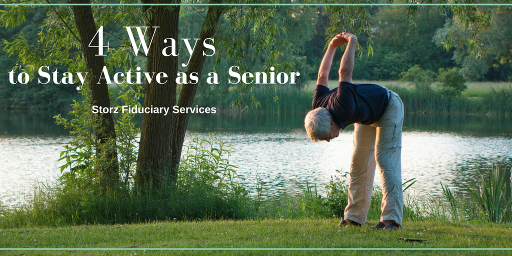
    4 Ways to Stay Active as a SeniorIt’s important for people of all ages to get regular physical activity. Countless studies have shown its positive effects on physical, mental, and emotional health. However, as you age, you might face concerns about injury. You might also wonder what sorts of activities are feasible for you. But staying fit doesn’t need to mean hours at the gym lifting weights! The important thing is to be moving around as much as possible, and to reduce the time you’re sitting.

    A study in 2012 found that those who sat for more than 8 hours a day increase their chances of developing type 2 diabetes by almost 90%! At the same time, a study published in the American Journal of Preventative Medicine showed that those who simply fidgeted while sitting reduced their risk of all-cause mortality. Clearly, it takes less effort than you’d think to stay healthy. The key is to put the effort in and find what works for you! Remember to ask your doctor before embarking on any fitness regime.

    Here are four ways that you can stay active!

    Choose Active Hobbies

    A fun and simple way to stay active is by pursuing specific hobbies. You’ll want to choose ones that get you moving – even if it’s just in your backyard! Gardening is a great choice that many seniors like. Moving from kneeling, sitting, and standing is important for your bones and muscles to keep their strength. Working with your hands promotes brain and physical coordination.

    The best part is, you can make it as comfortable as you like, and go at your own pace. You can buy a kneeling pad to ease some pressure off your knees. You can take a rest as often as you like. Even 5 minutes is great for you! The fresh air will do wonders for your mood as well.

    Other options include knitting, needlework, painting, and scrapbooking. When you think of fitness, these might not come to mind. But the fact is that you’re moving your body, no matter how small the movements are, while engaging the brain. Open your mind to the possibilities!

    Gentle, Low-Risk Exercise

    Yoga, Pilates, Tai chi, and swimming are popular among seniors. They carry little risk of serious injury, and are easy to do in groups, with friends, or at home alone. They’re an excellent option for those who are new to exercise or have concerns about safety.

    • Yoga includes breath control, simple meditation, and the adoption of specific bodily postures, and is widely practiced for health and relaxation.
    • Pilates is designed to improve physical strength, flexibility, and posture. It also enhances mental awareness.
    • Tai chi is actually a martial art, however it focuses on alleviating stress and anxiety through slow and carefully controlled movements. Tai chi is often practiced in an outdoor setting, and can be quite invigorating!
    • Swimming is a low-impact exercise, with little risk of injury. It’s gentle on your joints while improving muscle tone.

    Use a Buddy System

    Choose a friend or family member to be your buddy and go on walks or other activities with you. It could be your neighbor, your best friend, or even your spouse.  You hold each other accountable, and it’s easier to stay committed that way. They’ll provide you with companionship and encouragement. In turn, you’ll do the same for them.

    Perhaps you can arrange to go on monthly hikes. If possible, it’s highly beneficial to find someone to walk with on a daily basis. Your buddy can even join you in your active hobbies, as discussed above. You can garden or knit together, for example, while enjoying each other’s company. You don’t need to do it alone!

    Senior Group Fitness Classes

    Group classes are like the buddy system, except on a larger scale! They bring a lot of fun and excitement to what might otherwise be considered tedious.  You might be surprised at how many there are specifically for seniors!

    These classes can be found in health clubs, local gyms, recreation departments, YMCAs, community wellness programs, and more. They can utilize anything from basic exercises using handheld weights, to yoga, to cardio. Silver Sneakers (https://www.silversneakers.com) is a popular program, and that’s provided at no cost! AARP and the ICAA have also teamed up to provide a service that’ll help you search for the right program: http://www.icaa.cc/facilitylocator/facilitylocator.asp

    Whatever you choose, the point is to be proactive about your fitness level. Only you and your doctor can decide what type is right for you. However, at any stage in your life there are things you can do to stay healthy and active!

    Tags: , , , , , , , , , , , ,

  • Many of us have heard of or even experienced a family conflict at the bedside of a very sick loved one. Maybe you have read stories in the news about family members disagreeing about whether to continue Mom’s aggressive care or to let her have a natural ending without medical intervention. Neither side of the argument might be wrong, but the big question is: “What would Mom have wanted?”

    Such conflicts may be more easily managed or even minimized with a little planning and conversation ahead of time. In fact, according to a survey conducted by The Conversation Project, more than 90% of 2,073 Americans aged 18+ believe that having a conversation on end-of-life matters with loved ones is important. But only around 30% have actually done so.

    Discussing options, decisions, and wishes about end-of-life care can make a big difference during crises. The benefits to expressing wishes about end-of-life care include:

    • Giving loved ones a chance to understand important end-of-life care wishes for the future whether it is related to a progressive illness or older age
    • Removing the burden from caregivers and loved ones, who might not agree with one another when making certain end-of-life care decisions
    • Helping doctors and family members make vital healthcare decisions if a dying loved one becomes unable to make decisions for him or herself

    By having an end-of-life care conversation, you can establish comfort and trust with those in charge of your care. It may offer you and your loved ones more peace of mind than you might expect.

    Why It’s Important

    In a study published in the Journal of the American Medical Association, 126 participants—including 48 dialysis patients, 40 people with HIV, and 38 patients in long-term care facilities—answered a series of in-depth, open-ended questions about quality end-of-life care.

    Survey answers were analyzed and organized into the following 5 main categories representing what study participants cared about most:

    • Receiving adequate pain and symptom management
    • Avoiding inappropriate prolongation of dying
    • Achieving a sense of control
    • Relieving burden for caregivers, family members, and others
    • Strengthening relationships with loved ones

    How would you answer the question as to what quality end-of-life care is? What would matter most to you? It can help to jot some of your thoughts down.

    Having A Conversation with Loved Ones

    If you or your loved one is advanced in age or is managing a chronic, life-threatening or serious illness that will worsen over time, having on open and honest dialogue with loved ones, caregivers and family members is a good way to ensure that end-of-life wishes are known. Of course it can be difficult to discuss this topic—your loved ones may not want to face the sensitive topic of the uncertain future. Still, it’s important to talk about it.

    There is no right or wrong way to have the discussion—and there is never a wrong time to bring it up, as long as it’s done ahead of a crisis. Here are a few helpful tips to keep in mind:

    • Take the time to think about what’s important to you—don’t assume that loved ones will know exactly what you want. What are your thoughts on the type of medical care you would like to receive and the extent of life-saving efforts you would wish for (e.g., CPR, artificial breathing, artificial feeding, full life-support)?
    • Discuss your end-of-life concerns with the healthcare team to learn more about your options. If you are managing a condition, ask: How long will the end-of-life journey be? How much pain and suffering will there be? How will the condition affect your family?
    • Communicate your wishes to your family. Your loved ones may disagree about certain options but that’s okay. You may need several talks. It’s important to start the discussion before a crisis occurs
    • Ask yourself: What has to be done to get personal affairs in order (e.g., finances, home)? Do the wishes need to be put in writing, is a living will needed?
    • Think about who you would want to help you make decisions about your care, in the case that you are not able to do so yourself

    Remember that making end-of-life care decisions may be easier for you and your family with a little preparation and communication. So take the time now to ensure that your last wishes are known and that your quality of life during those moments will be supported.

    Tags: , , , , , , , , , , , ,

  • September 27, 2016 /  Miscelleaneous

    Keep Your Positivity When Confronting Driving IssuesDespite many people’s assumptions, growing older doesn’t mean that you’re no longer able to drive safely. However, at a certain point it’s a subject you’ll need to think about. There are several questions you should pose to yourself. Let’s go over them so that you can prepare for the future while easing your mind about this important subject.

    How important is driving to you? First and foremost, you need to assess whether or not this is a big deal for you. Many seniors don’t care to drive very often, for a multitude of reasons, and so aren’t too concerned about the day they’ll need to give it up completely. It’s more common, though, that the thought of being unable to drive oneself around is distressing to some degree. This can be seen as one of the last vestiges of one’s independence. Without the ability to drive, you become more dependent on others. By examining your feelings, you can begin to emotionally and mentally prepare for this.

    If you were unable to drive anymore, what would be your plan? Another crucial step in allaying your fears is having a plan. It’s helpful to include your family in this discussion. Very likely, they’ll play a part in helping you get around. They can also assist you in finding transportation services. You might be surprised at the variety of choices available to you. Here are just a couple options.

    Even before you reach the point of being unable to drive, you might enjoy taking advantage of errand services. Someone can be hired, whether independently or through an agency, to pick you up and take you to places like the doctor and the grocery store. They can use your car or their own. This is a really convenient and often quite affordable option. They can be hired for regular events or simply as things arise. It’s also a good way to ease into a life of less driving.

    A popular service is paratransit. Public transit, non-profit aging organizations such as Seniors First (see the resource page for contact information), and private agencies provide door-to-door or curb-to-curb transportation using mini-buses or small vans (vehicles for less than 25 passengers). Paratransit service often requires users to make advanced reservations but still offers a degree of flexibility and personalization in scheduling. Curb-to-curb service provides for passenger pick up and delivery at the curb or roadside; door-to-door service offers a higher level of assistance by picking up passengers at the door of their homes and delivering them to the doors of their destinations. Paratransit and van services offer reduced fares for older adults and persons with disabilities, and some providers may operate on a donation basis.

    If your adult children are going to be helping you out, then developing a schedule is a must. Open communication will prevent misunderstandings. Your family will have their own daily concerns: work, time with their spouses and children, and certain responsibilities. It will take coordination to make it work. Most seniors end up using a combination of outside services and family help.

    What issues will affect your ability to drive independently? With age comes medical issues, many of which will greatly affect your driving skills. You have to be honest with yourself. Do you have any eye or hearing problems? It’s dangerous to ignore the possibility that these are hindering your safe driving. Cataracts, hearing loss, and reduced reflex times should be taken into account. Talk to your doctor openly and honestly. They’ll help you determine what your best course of action is.

    Addressing the possibility of losing your ability to drive is understandably difficult. With emotional and practical support from family and friends, you can successfully accept this eventuality, while focusing on what you can do in the here and now. A positive attitude will go a long way!

    Tags: , , , , , , , , , , , , ,

  • September 14, 2016 /  Miscelleaneous

    Dating In Your Golden Years: How to Address Common ConcernsThe realm of dating and romantic relationships can be a tricky one for those in their golden years. If you’re single or widowed, you may have considered the prospect of dating but feel unsure for a number of reasons. Here are some questions you might ask yourself:

    • Are romantic relationships important to me as I grow older? Why or why not?
    • Who do I currently turn to for social support? Is it enough?
    • If not, what can I do to improve that? How do I strengthen my current relationships?
    • If I’m widowed, how can I address the issue of dating with my children?

    In this post, we’ll consider two common issues facing seniors who want to date: the concerns of their adult children, and how to cope with the complications of senior dating.

    Addressing Your Children’s Concerns

    In a survey conducted by the Home Instead Senior Care® network, only 28% of adult children surveyed would be comfortable talking with a parent about sex if the parent became single. Approximately 39% would be comfortable talking about dating.  This doesn’t need to be a source of contention or awkwardness, however.

    As their parents age, many adult children can be resistant to any romance in their parent’s lives. Consider why they might struggle with this idea. For example, your children probably grew up viewing you and your husband/wife as a team that made their lives complete and happy. Seeing you alone can be difficult for them. In addition, they might see your desire to date as a betrayal of their other parent.

    Oftentimes they’re resistant to the concept because they want to protect you. Perhaps you were extremely heartbroken when you divorced or when your spouse passed on. One of the worst things for children to experience is seeing their parents devastated. It is only natural that they want to prevent this from happening again.

    Don’t be afraid to talk candidly with them. Acknowledge their concerns, but remind them that you’re an adult who is allowed to make your own decisions. They’ll likely appreciate that you understand their feelings, which will help them worry less.

    The Difficulties of a New Relationship – and How to Face Them

    Even if you have a strong desire to form new relationships, you might think, “I’m too old for this!” You’re not alone, though. Others are going through the same thought processes. And the people you’re looking for will understand what it means to be a senior interested in dating. You already have that in common! Camaraderie is important to a happy life, and having a romantic partner who knows the same struggles can bring you a lot of peace.

    Remember, you don’t need to go out and immediately find someone to remarry. Many senior daters would be quite happy to have someone to go to restaurants with, and have companionship when they want it, but are satisfied to keep their lives just as they are. You set the parameters of what you really want.

    Creating strong social support is the first step, and an important part of your life, whether it leads to romance or not. Get out of the house, make new friends, and try new things to build your confidence. You never know what sort of joy you might feel when you end up finding a new hobby!

    Your age and that of a potential partner plays an important role. If you have health issues that could affect the relationship, then be honest about it. It’s natural for health to deteriorate as we age, and they’ll understand that. Likely they have some health concerns themselves! You can both agree to focus on the positive and enjoy getting to know your new companion.

    Practical matters do need to be considered over time. If things get serious, you should discuss with them their feelings about facing upcoming challenges together. Start the conversation early. Who will care for both of you when you can no longer do so yourself? Where will you live? By planning ahead, you greatly increase your chances of happiness and satisfaction.

    Senior dating can be a wonderful thing for many people. It helps them remember that despite age and health problems, they’re still here and there’s plenty of life to enjoy yet! Don’t be afraid to consider the possibility.

    Tags: , , , , , , , , , , , ,

  • September 1, 2016 /  Basics

    How to Face Health Issues with PositivityWhile changes that occur with age may prevent your life from being what it was in your younger years, there’s a lot you can do to improve your health and longevity and reduce your risk for physical and mental disability as you get older.

    So how do you give yourself the best possible chance for a long, healthy life? Although you aren’t able to control every factor that affects health as you age, many are in your hands. Some keys to living a long, healthy life include:

    • Make healthful lifestyle choices—don’t smoke, eat right, practice good hygiene, and reduce stress in your life.
    • Have a positive outlook.
    • Stay as active as possible.
    • Take safety precautions.

    One of the most important things you can do to stay healthy is to maintain your sense of purpose by staying connected to people and things that matter to you. However, this isn’t always easy—especially in a society that all-too-often views older people as a burden.

    Try visiting your local senior center. Spend time with at least one person—a family member, friend, or neighbor—every day. Volunteer in your community, attend a local event, join a club or take up a new hobby. For example, Seniors First has a “Friendly Visitor” program where they match up volunteers with a home bound senior.   http://seniorsfirst.org/sf-programs/friendly-visitors/

    Stress can have an enormous impact on your health and your quality of life at any age—and even more so as you get older. As you age, you’re also more likely to experience emotional trauma associated with loss—the deaths of people close to you (friends, family members, spouse), your own health, and/or your independence. For many seniors, dealing with the loneliness caused by multiple losses can lead to a diminished investment in life—especially when combined with other issues, like financial concerns.

    Try these tips to help deal with difficult changes:

    • Focus on being thankful. Appreciate and enjoy your life.
    • Acknowledge your feelings and express them. Try writing in a journal.
    • Accept that some things are out of your control.
    • Try to keep your sense of humor!

    Seniors are at increased risk for depression. If you’re feeling overwhelmed, or unable to deal with stress, it’s important to reach out to family, friends, caregivers and health care providers.

    The risk for a number of medical conditions increases with age. In fact, some studies show that the average person 75 years of age has three chronic medical problems—ranging from minor to serious. If you have concerns or questions about your health, talk to your doctor.

    At this point in your life, it’s more important than ever to eat healthy. However, good nutrition is a challenge for many seniors. You may even experience changes in your sense of taste, which can affect your appetite. Slower digestion and metabolism can change how your body processes food. You may have difficulty shopping for, purchasing or preparing nutritious foods and meals.

    If you’re having trouble maintaining a healthy diet, talk to a family member or your doctor. Many communities have programs that provide healthy meals to seniors and take the guesswork out of the equation. Again, Seniors First offers the My Meals program that serves delicious hot meals. http://seniorsfirst.org/sf-programs/senior-nutrition/

    Exercise is an important part of a good health at every age; however, many older adults don’t get the recommended amounts of physical activity. Staying active can boost vitality, help maintain strength and flexibility, improve mental function, reduce your risk for health problems, and even help relieve chronic pain. Be sure to talk to your doctor, however, before beginning an exercise program.

    Find an activity you enjoy and begin slowly. Try to incorporate endurance activities, strengthening exercises, stretching and balancing exercises into your exercise program. Good choices include walking, swimming, biking, gardening, tai chi and exercise classes designed for seniors.

    One of the most important ways to stay healthy as you age is to seek the care of a geriatric physician, also called a geriatrician. Geriatric physicians are medical doctors who specialize in the diagnosis, treatment and prevention of disease and disability in older adults. They are specially trained in the aging process and provide comprehensive health care.

    With careful consideration, planning, and an open attitude to trying new things, you can stay positive in the face of health changes!

    Tags: , , , , , , , , , , , ,