
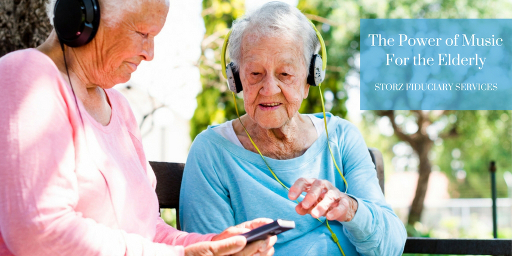
 It’s impossible to imagine a world without music. For most of us, music holds special meaning, and has emotional value. It creates strong responses, such as hearing a song from your past that connects with the feelings you had back then. When you take a step further and actually create music yourself, it involves complicated processes in your brain that can be incredibly therapeutic.
Research has shown that music shares neural networks with memory, attention, motor movement, language and executive functioning. All of this helps us understand the way our brain processes music as we age; even if we have a disease or lesion in the brain that affects our motor movements, memory, speech, etc., we can still process music and use it as a tool to re-wire our non-musical neural networks. It is virtually impossible to completely lose music perception and production processes in our brain.
One wonderful example can be seen in this video clip, taken from the documentary Alive Inside. It highlights the reaction of an elderly Alzheimer’s patient to music from his era. You can watch it here:
Clearly, music has the ability to take us back in time, to evoke memories and feelings from the past. Hearing a tune you love can offer comfort and cheer during times of sadness, and can even turn a bad mood around almost instantly. So, how can music help you, regardless of your current age or mental abilities?
- Music taps into our memories. Have you ever been driving, heard a song on the radio, then immediately been taken to a certain place, a specific time in your life, or a particular person? Music is second only to smell for it’s ability to stimulate our memory in a very powerful way. Music therapists who work with older adults with dementia have countless stories of how music stimulates their clients to reminisce about their life in a positive way.
- Music is a social experience. Our ancestors bonded and passed on their stories and knowledge through song, stories, and dance. Even today, many of our music experiences are shared with a group, whether playing in band or an elementary music class, listening to jazz at a restaurant, or singing in church choir. Music makes it easy for music therapists to structure and facilitate a group process. For seniors without family nearby and who lack social involvement, signing up for a music therapy class can bring them joy and relaxation.
- Music is non-invasive, safe, and motivating. We can’t forget that most people really enjoy music. This is not the most important reason why music works in therapy, but it’s the icing on the cake. Many seniors have found that putting on a favorite record can address mild anxiety very well, and can be a complement to any medical interventions. (Individual cases vary and medical choices should always be made with your doctor.)
What issues exactly does music therapy address, and what is your greatest concern for your own self?
- Cognitive skills: Music can help seniors process their thoughts and maintain memories. For dementia patients, music from their childhood or young adult years has proven to be effective in obtaining a positive response and involvement, even when the patient can no longer communicate. So starting when you are still a senior, not quite elderly, can give you a strong emotional foundation as you age.
- Speech skills: Music therapy has been proven to help older adults answer questions, make decisions, and speak clearer. It can help slow the deterioration of speech and language skills in dementia patients; studies have shown that even when an Alzheimer’s patient loses the ability to speak, they can still recognize and even hum or sing their favorite song, as was illustrated in the video clip above.
- Stress Reduction: Stress, anxiety, and depression are all too common for seniors. Playing music you enjoy can help you relax and work through your emotions. Slow songs, like ballads, can help prepare you for bed, or energetic songs, such as jazz, can help you stay alert while going about your daily activities. The great news is that the possibilities are endless!
- Physical Skills: Music can inspire movement in seniors. With music comes dancing, after all! Music and dancing promote coordination and can help with walking and endurance. Even if you aren’t as mobile as you’d like, music can inspire toe tapping and clapping, thus getting the blood flowing once again.
If you’re convinced, and want to get involved, check with your local senior center, and the community center, to see if they have any programs in place. Additionally, the American Music Therapy Association has a list of music therapists available, as well as general information on the topic. You can find them at www.MusicTherapy.org.
Finally, you can go dig out some of your old records, or buy some new CDs, and take the time to listen and relax everyday. Take care of yourself now, and you’ll be happier in the future!
