
• July 27, 2016 /  Difficult Conversations

    Facing the Difficult Subject of Living Choices Many families want to avoid talking about end-of-life matters. This is understandable, as it’s a weighty subject with a variety of emotions attached to it. Parents feel resistant to the idea that they are closer to facing this. Children and other relatives are saddened and worried by what the future holds for their loved one. However, it’s a conversation that can’t be sidestepped. Facing it head on with a frank attitude will help your family come to terms with it sooner.

    One of the first and most important items to address is living choices. You want to have clear plans before there’s a crisis. Consider whether your parent needs minimal assistance, or more intense care for issues like Alzheimer’s and dementia. Naturally, most older ones would still like to stay in their homes. But if they struggle with day-to-day activities and household duties, they might wonder how that will be possible. It’s important to assess the reality.

    Some questions that you will want to discuss with your parents would be, “What challenges do you face? Is it difficult to drive, walk up and down stairs, or access the bathroom? What’s the plan in an emergency?” It’s completely possible that they can continue to live at home. Mom or Dad might require part-time or full-time care to manage this. Sometimes simple changes or adaptations to the home can also make it feasible.

    For those who remain in their home, there’s an abundance of resources that will help. Options include home health aides, housekeeping, meal delivery service, and transportation services. Retirement communities offer many of these services while enabling residents to enjoy independent living.

    For some, living alone is no longer possible. Consider whether or not moving in with you is the right choice. It all depends on the circumstances. You might look into senior housing. Cost plays a primary role, so this needs to be factored in. You might not realize how much your parents value your input. Show care and empathy. Ask questions and genuinely listen to their answers. They absolutely need to be involved in the decision-making process if they’re going to be happy with the end result. Don’t rush this decision! Take your time and think wisely.

    Writing down a list of their wants and needs is helpful. What features would make them more comfortable? What’s essential to their care? This is valuable even if they continue to live at home or choose to live with family members. You’ll need to consider their financial and work situations, and the adjustments that might need to be made in those areas. Bringing on a part-time aide can maintain balance.

    This is a monumental time in both parent’s and children’s lives. Even with a well laid-out plan, nothing’s going to go perfectly. At times, emotions will run high. But through communication, empathy, and understanding, your family can make it through.

    Tags: , , , , , , , , , , , , , ,

  • July 12, 2016 /  Basics, Resources

    This is a continuing series using information from the booklet written by the National Institute on Aging working with the National Institutes of Health called: Talking with Your Doctor.Involving Your Family, and Additional Resources (U.S. Department of Health and Human Services, NIH Publication No. 05-3452 August 2005. Reprinted April 2010.)

    How Others Can Help

    Many people find it beneficial to involve some of their friends or family in their medical care. The booklet points out that you may feel more confident if someone else is with you. If you choose to have someone come along to the doctor, they can aid you in remembering exactly what you wanted to discuss. They can also remember details that the doctor told you.

    Your caretakers can also bring up issues of their own. It’s easy for them to forget that caring for themselves is one of the most important things they can do. When they’re refreshed, you benefit as well. When they have a chance to speak with your doctor, they can express concerns and ask questions. They might wonder what to expect in the future, where they can find encouragement, or what practical ways they can care for themselves.

    After the appointment, you can discuss what the doctor said together. “They can remind you of the important points and help you come up with questions to ask next time,” says the booklet.

    Even if they don’t go to your actual appointment, they can still be a sounding board. The booklet says, “They can help you practice what you want to say to the doctor before the visit. […] And they can help you come up with questions to ask next time.” Many find it a challenge to express their thoughts to their doctors, so going over it with someone beforehand is very useful.

    It’s important, however, to remember that they’re only there to be of assistance. The visit is still between you and your doctor. You don’t want to allow them to take over. You could choose to talk with your doctor alone, and bring your friend or family member in later on in the visit.  It’s wise to discuss boundaries and expectations in advance.

    Additional Resources

    Your friends and family aren’t the only way to get support. There’s a multitude of information available to you. The booklet recommends: “the Internet, home medical guides, books and articles available at libraries, national organizations or associations, other institutes within the National Institutes of Health, and self-help groups.” Staying informed and educated is essential to a healthy, working relationship with your doctor.

    You can look into government programs that give aid for health care, prescriptions, food and utilities. Approaching a counselor for advice goes a long way towards maintaining your emotional and mental health. Maintain your friendships with those facing the challenges of aging as well.

    Taking an active role in your health care will improve your sense of control, even during tumultuous times. It’s easy to feel too helpless when your health deteriorates, but it’s possible to get involved and be productive. By inviting friends or family to help out as well, you build a support system that will assist you in the hard times.

    Tags: , , , , , , , , , , , , ,

  • June 27, 2016 /  Resources

    21st seniors brew festPlacer County’s finest wineries, microbreweries, cuisines, chocolates, live music, raffle, silent auction.

    The Fall Wine & Brew Fest is a fundraising event that supports the vital senior services and programs provided to Placer County seniors, helping them to remain independent and in their home for as long as possible.

    • When:   Saturday, August 20, 2016
    • Time:    5:00 p.m. – 9:30 p.m.
    • Where: Blue Goose Event Center, 3550 Taylor Road, Loomis, CA 95650

    Tickets are $50 each in advance and $60 at the door.

    Visit the Fall Wine & Brew Fest website for more information.

    Tags: , , , , , , , , ,

  • June 21, 2016 /  Basics, Difficult Conversations

    sensitive subjectsThis is a continuing series using information from the booklet written by the National Institute on Aging working with the National Institutes of Health called: Talking with Your Doctor. (U.S. Department of Health and Human Services, NIH Publication No. 05-3452 August 2005. Reprinted April 2010.)
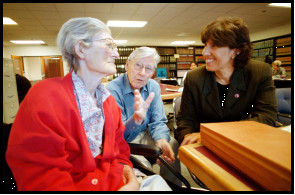
    For many, it’s hard to discuss topics like depression, grief, family issues, incontinence, and alcohol use with their doctor. It may feel awkward to bring up such personal matters. The fact is, though, that doctors are used to talking about these things with their patients. After all, the very nature of the doctor-patient relationship is personal. Let’s take a look at some of the subjects you may hesitate to bring up.

    Depression and Grief

    One of the most difficult aspects of growing older is facing the loss of your spouse, friends, and other important people in your life. This would be tough at any age, but can be even more significant at an older age when the losses are compounded.

    Mourning is normal, but clinical depression is not. Take note when feelings of sadness are constant, last more than a few weeks, are accompanied by poor or increased appetite, and lack of energy. If this applies to you, it’s time to talk to your doctor. As the booklet says, “A doctor who knows about your losses is better able to understand how you are feeling. He or she can make suggestions that may be helpful to you.”

    Problems with Family

    Another issue that can cause emotional distress is difficulty with your family. Age and illness can bring severe stress to any family, even those who are normally very loving. You may feel that family issues should be kept private. Remember, though, that your doctor is trained to offer you valuable assistance in these areas. If you feel you’re being abused emotionally, physically, verbally, or even financially – speak up!

    Falling, Incontinence, and Memory Problems

    Since falling can be very serious for an older person, many develop a real fear of it. It could prevent them from doing the things they usually enjoy, or from trying new activities. However, you can become weaker and frailer through this, hence increasing your chances of actually falling! Gentle and specific exercises can help, and your doctor can advise you about these.

    Incontinence is an embarrassing subject for many. You may be surprised to learn that there are many useful exercises and medications to assist you in controlling your bladder. Don’t hesitate to ask your doctor for help because of fear of embarrassment. It’s worth it to improve your quality of life!

    It’s not uncommon to experience some issues with memory as you age. That doesn’t make it any less distressing, however. The booklet assures you, “For most older adults, thinking and memory remain relatively intact in later years.” If you or your family members do notice a change in function, be specific when talking to you doctor about it. Tell them which parts of your life it’s affecting. There’s no reason you should suffer in silence.

    Alcohol and Sexuality

    These two matters are especially sensitive for many. Alcohol moderation is important, though, because the effects on a person may change or increase in later years. Depression and loss, discussed earlier, can even contribute to one misusing alcohol as a coping mechanism. One way to bring this up, the booklet suggests, is by saying something like, “Lately I’ve been wanting to have a drink earlier and earlier in the afternoon and I find it’s getting harder to stop after just one or two. What kind of treatments could help with this?”

    Some assume that aging means sexuality will decrease or worsen. This doesn’t need to be the case! Many have a healthy sex life long into their later years. Most doctors recognize this. If you aren’t satisfied with your sex life, it could be because of a medication or disability. Don’t be shy bringing this up. Let them know you have a personal question to lead into the topic. Be assured they’ll be very understanding.

    It’s important to have a doctor you can discuss these sensitive topics with. What if you’re uncomfortable with yours? Try being direct with them. Tell them your issue and how it makes you feel. Misunderstandings happen, and communication fosters trust. If you truly don’t feel satisfied, though, it may be time to look for a new one. Your comfort matters, and you need support while coping with these changes.

    Tags: , , , , , , , , , , , ,

  • September 25, 2015 /  Resources

    20th seniors brew festPlacer County’s finest wineries, microbreweries, cuisines, chocolates, live music, raffle, silent auction.

    The Fall Wine & Brew Fest is a fundraising event that supports the vital senior services and programs provided to Placer County seniors, helping them to remain independent and in their home for as long as possible.

    • When:   Saturday, October 24, 2015
    • Time:    5:00 p.m. – 9:30 p.m.
    • Where: The Ridge Golf Course and Event Center, 2020 Golf Course Road, Auburn, CA

    Tickets are $45 each in advance and $50 at the door.

    Visit the Fall Wine & Brew Fest website for more information.

  • September 14, 2015 /  Basics

    This is from the Home Care Assistance website: http://homecareassistance.com/expert-advice-on-how-to-reduce-fall-riskFalling

    Q: What are some of the recognizable signs that an individual is at-risk for a fall?

    A: The common fall risk assessments are a good place to start. Following the completion of these assessments, I would look at the below list of questions to assess why the person was at risk, how at risk was he or she, and offer some suggestions about how to change the situation.

    • How many times can a person stand up and sit down well?  (This shows his/her balance and strength)
    • How far can a person reach without moving his or her feet?  (This shows balance and accommodation to loss of balance)
    • How well does a person stand – how does he or she get started and how steady is he or she once up? (This demonstrates his/her ability to plan movements and accommodation to change)
    • Can the person get up off the floor well?  (This single exercise might make the most difference in confidence, strength, endurance and balance as well as confidence for the client, caregiver or family)
    • Can the person roll and change positons on the bed well? (These moves help people remember how to move well, maintaining motor cognitive skills and motor memory)
    • How clear is the floor where he or she walks and what is the quality of the things the person hangs on to walking around?
    • How well can he or she see changes in walkways such as steps or bumps?  How is his or her vision and the person’s ability to use their vision (e.g. looking around a room)?
    • How variable is his or her skill level when it comes to walking based on fatigue, blood pressure, hunger, medication, pain, etc.?

    Q: Any other thoughts?

    A: It is important to understand that strength is not enough to maintain balance. Engaging in meaningful, active tasks is one way an occupational therapist can help people maintain balance. Routine exercises tend to lack interest and effectiveness. However, exercises are a good start and more effective if the person keeps them up. Another way to start working on balance is to “just stand up” because once the person is able to stand more easily, the more likely he or she is to be active, which is the best exercise of all.

    Julie Groves, Occupational Therapist (OTR/L), graduated with a degree in Occupational Therapy from the University of Puget Sound in Tacoma, Washington and has over 30 years of professional experience in occupational therapy. Groves currently serves on the Board of Coda Alliance, Silicon Valley Community Coalition for End-of-Life Care and is a regular speaker at the San Jose State Occupational Therapy Department. Her awards include the Occupational therapy Association of California President Award (1991) and Special Contribution Award for the Santa Clara Chapter OT Association (1993), and she is a Bay Area leader in the field of occupational therapy.  She was just nominated for the Occupational Therapy Association of California’s Entrepreneur of the Year Award.

    Tags: , , , , , , , , , , , , , , ,

  • July 27, 2015 /  Basics, Dementia, Resources

    Caregiver

    www.Caregiverstress.com Sponsored by Home Instead Senior Care Services

    Senior sexuality represents possibly the last remaining taboo. No one wants to talk about it. In a 2013 survey conducted by Home Instead, Inc., fewer than one-third of adult children said they were even the slightest bit comfortable talking to their parents about senior sex.

    And that’s a problem, because certain medical conditions—like dementia and Alzheimer’s disease—can cause seniors to engage in inappropriate sexual behavior. This development can be disturbing for adult children and caregivers alike, and it can be difficult to manage. As a senior care professional, you can help your clients address these behaviors by sharing some tips and resources.

    Defining Inappropriate Sexual Behavior

    Let’s be clear about one thing: not all sexual behavior by seniors is “inappropriate.” Many seniors enjoy healthy sex lives well into older age. A study by the New England Journal of Medicine found 25 percent of seniors over age 75 are having sex, and about 50 percent of those between ages 65 and 75 are also sexually active.

    No matter the age of the adult participants, consensual sexual behaviors can be considered normal and healthy—as long as the participants retain the cognitive ability to consent.

    When Sexual Behavior Becomes Inappropriate

    Unfortunately, cognitive decline can cause seniors to engage in inappropriate sexual behaviors outside of a loving relationship or in unsuitable environments. These behaviors can cause distress for family members and caregivers who may feel ill-equipped to deal with them.

    Let’s look at three common situations and how to cope with them.

    1. Masturbating in public

    “My father had vascular dementia. He started masturbating in public. Of course, I was appalled when I was told this and then I witnessed it. (I guess a part of me was hoping that I was being told incorrect info.)”

    If a family caregiver asks you for guidance regarding a senior loved one who is fondling himself in public, you might advise them to start with a medical examination. In seniors who can’t communicate well, public masturbation may signal a medical issue, such as pain or a urinary tract infection. These medical causes may be ruled out (or treated) with a physical exam conducted by a skilled geriatric practitioner.

    In our anonymous family caregiver’s case, a trip to the doctor did the trick. She said, “I involved his MD, who examined him, and then gave him a low dose of an anti-depressant medicine. The behavior stopped.”

    1. Inappropriate or unwelcome touching of others

    “My mom seems to have a problem sometimes. My hubby will give her a hug as he always has. But occasionally she puts her hands where they shouldn’t be. So hubby tries to avoid her… which confuses her when she wants that hug.”

    Sexual inappropriateness with dementia certainly is not limited to men. As this comment illustrates, women can develop wandering hands, too.

    One way to cope with wandering hands during embraces is to develop a new way to hug. Follow these steps:

    • As you approach the senior, stop a short distance away and raise both hands in front of you in a “stop”-like gesture. Smile and make eye contact.
    • Verbally encourage the senior to raise her hands in the same position.
    • Move forward and place your palms against hers. Quickly interlace your fingers to hold onto her hands.
    • Now that the senior’s hands are secured, you can guide their hands toward your shoulders as you lean in for a ‘hug,’ to touch cheeks or to give your loved one a kiss.
    • When the embrace is finished, back away and release the senior’s hands.

    This method allows seniors to enjoy the physical touch of family members while ensuring hands don’t inadvertently wander where they shouldn’t go.

    1. Stripping in public

    Because Alzheimer’s disease and related dementias reduce a person’s inhibitions, seniors with these conditions may not realize it’s inappropriate to take their clothes off in public. If a family member seeks your guidance on this issue, it’s important to point out this behavior may not be sexual in nature at all.

    Seniors with dementia may disrobe in public for a variety of reasons, from feeling too warm to experiencing an urgent need to urinate. If family members can figure out what triggers the behavior, they may be able to resolve the underlying issue.

    In the meantime, family members can manage the activity as it occurs. Advise them to always take a shawl or throw with them to cover their family member as the clothes come off. Help your clients find resources for clothing that is difficult to remove, such as items with fasteners in the back. Encourage family members to stay calm and not to shame their loved one. Be sure family members know their loved one cannot necessarily control this behavior.

    Keep the Conversation Going

    As a senior care professional, you have the opportunity to bring senior sexuality out into the open. While adult children report reluctance to talk about this subject, they seem to feel relieved when someone broaches the topic to them. As another member of the Alzheimer’s Reflections community put it:

    “I have been a caregiver for the past 18 years. In all that time I have never had that issue come up. It actually had never even occurred to me! How awesome that you have brought this subject to the forefront for discussion if the need arises!”

    This is the link for the article:

    http://www.caregiverstress.com/geriatric-professional-resources/share-clients/seniors-sex-dementia-managing-inappropriate-behavior/?utm_medium=Email&utm_source=ExactTarget&utm_campaign=10445760

    Tags: , , , , , , , , , , , ,

  • April 21, 2015 /  Resources

    Big Day of GivingI am on the board serving Seniors First and we participate in the Big DoG (Big Day of Giving) program on May 5, 2015. Please consider giving through this link on May 5th. https://bigdayofgiving.org/#npo/seniors-first-inc

    The Big Day of Giving is a national event but has strong support in the Sacramento and Placer county regions. There are many good organizations that participate but only ONE Seniors First. This is becoming one of our largest funds raisers. Please go to the Seniors First page and see how we support our seniors (they are also listed on my resources page). http://www.seniorsfirst.org/

    Tags: , , , , , , , ,

  • September 3, 2014 /  Resources

    seniors brew festPlacer County’s finest wineries, microbreweries, cuisines, chocolates, live music, raffle, silent auction.

    The Fall Wine & Brew Fest is a fundraising event that supports the vital senior services and programs provided to Placer County seniors, helping them to remain independent and in their home for as long as possible.

    • When:   Saturday, November 8, 2014
    • Time:    5:00 p.m. – 9:30 p.m.
    • Where: The Ridge Golf Course and Event Center, 2020 Golf Course Road, Auburn, CA

    Tickets are $45 each in advance and $50 at the door.

    Visit the Fall Wine & Brew Fest website for more information.

    Tags: , , , , , , , , ,

  • July 14, 2014 /  Basics

    This is a continuing series using information from the booklet written by the National Institute on Aging working with the National Institutes of Health called: Talking with Your Doctor. (U.S. Department of Health and Human Services, NIH Publication No. 05-3452 August 2005 (Reprinted April 2010)

    Planning for care in the event of a serious illness is much like planning for your death, the only difference is that instead of planning for the care of your estate you are planning for the care of…you!

    Think for a moment: What happens to you if you get sick? You can probably handle that. Now what happens if you get really sick, like a flu or diarrhea that leads to dehydration? That’s a little more difficult. Now what happens if you fall and break your arm, leg or hip? Or maybe you get some serious pneumonia or, heaven forbid, cancer (I mean the life threatening kind)? Now the worst: what happens if your mind is not working and you can’t make decisions? Do you have a plan in place?

    Who cares for you in these situations?

    Along with a will or a trust a person should have an Advanced Health Care Directive (AHCD). Advance directives are written instructions letting others know the type of care you want if you are seriously ill or dying. These can be in the form of a health care proxy or a living will.

    A living will records your end of life wishes for medical treatment in case you are no longer to speak for yourself. I have seen these inserted into an estate plan in the section generally titled: Advanced Health Care Directive. I have also seen additional directives outside the estate plan: a Do Not Resuscitate (DNR) form or a Physicians Order for Life Sustaining Treatment (P.O.L.S.T.). The DNR is just signed by you but the P.O.L.S.T. is signed by you and your doctor (hence the phrase, “Physician’s Order”. The P.O.L.S.T. for is a little more comprehensive and is printed on bright pink paper so that emergency personnel are more likely to see it among the sea of white papers in a binder or on a refrigerator (think EMT). You may want to visit http://capolst.org/ for more information.

    Health care proxies, or agent/attorney in fact/surrogate, should a be a person you choose to advocate on your behalf to ask questions and find resources when you can’t or carry out your instructions listed in your P.O.L.S.T. or other directives.

    While AHCD’s are legally valid everywhere in the United States, each state has its own laws regarding format and wording. You will need to check with your attorney regarding the laws in your state. For example, the P.O.L.S.T. is accepted in California but not in Oklahoma. According to the According to the National POLST organization (http://www.polst.org/ ) many states are now going through the process of accepting this form but you will still need to discuss this with your attorney.

    Paying for medications

    This is a direct quote from the pamphlet:

    “Don’t hesitate to ask the doctor about the cost of your medications. If they are too expensive for you, the doctor may be able to suggest less expensive alternatives. If the doctor does not know the cost, ask the pharmacist before filling the prescription. Then call your doctor and ask if there is a generic or other less expensive choice. You could say, for instance: “It turns out that this medicine is too expensive for me. Is there another one or a generic drug that would cost less?

    Your doctor may also be able to refer you to a medical assistance program that can help with drug costs.”

    In case you weren’t aware, Medicare prescription drug coverage is available to people with Medicare. For information call 1-800-MEDICARE (1-800-633-4227) or visit the Medicare website atwww.medicare.gov

    Independence issues

    What about driving?

    In my post on December 10, 2013 I discuss the difficult conversation your loved one might have with you regarding driving. If you find that it is becoming more difficult to drive, it’s harder to see the road, you are bumping into things, and drivers are getting worse when they drive around you then it may be time to hang up the keys. Your doctor may have access to resources or organizations to help you plan for these events. It would make it easier on your family and the people around you if you do the research first on public/private transportation availability and recognize that if they approach you that they really are concerned.

    Assisted living

    I very rarely have clients that want to move into assisted living from their homes but if it becomes difficult for a home helper or caregiver to assist you and you find that you are not getting out to socialize then it may be time to move into an assisted living community. I will dedicate a whole post regarding this issue because there are still a lot of ways to stay at home that you may want to investigate before you make this decision.

    Woman reading

    Next: Discussing Sensitive Subjects

    Tags: , , , , , , , , , , , ,